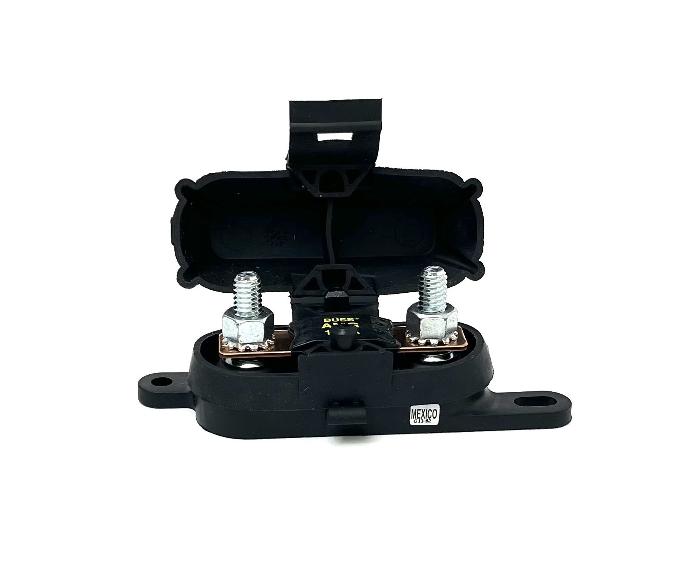
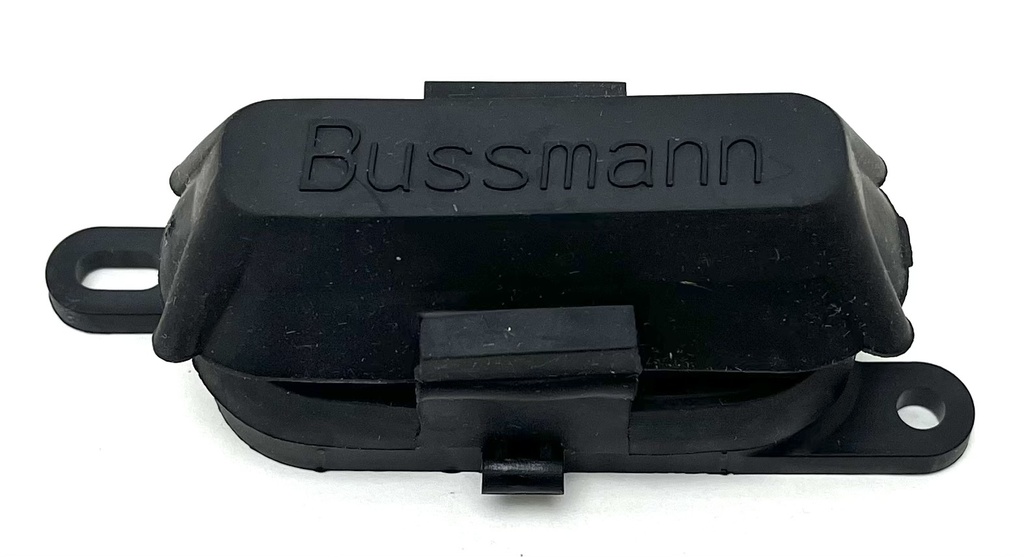
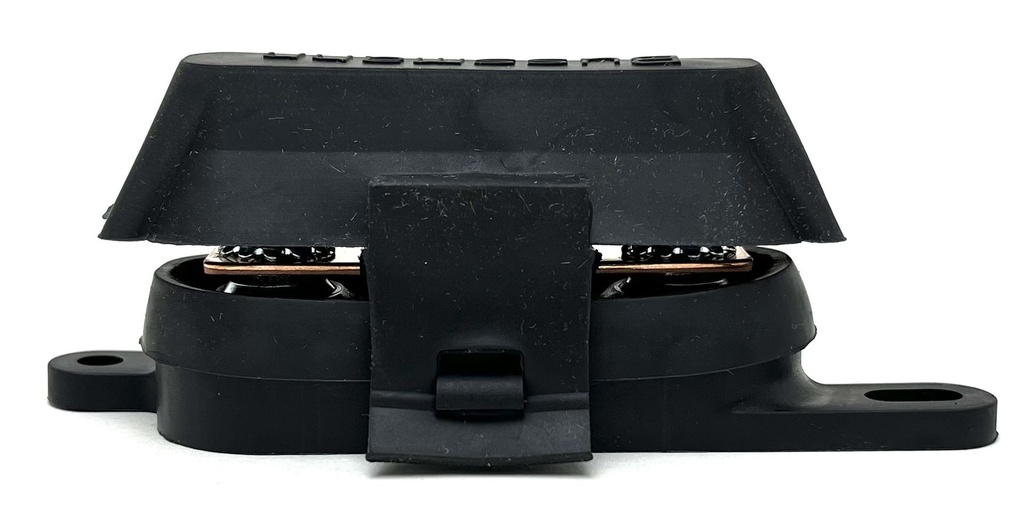
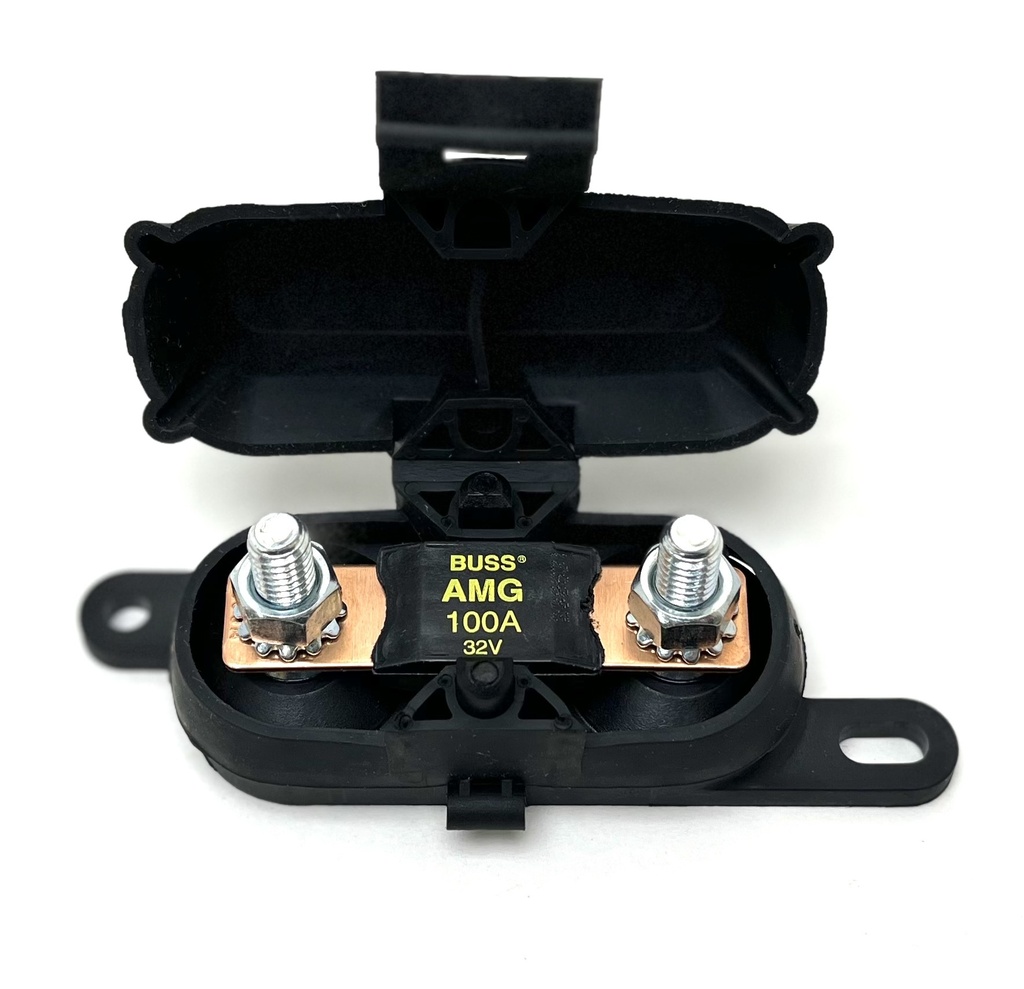
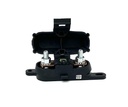
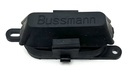
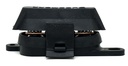
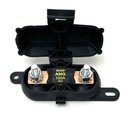
Originally, All Classic Cars used the starter as the power junction point. During the later 1970s and 1980s, manufacturers changed this practice to a power junction block to have the power leads move away from the corrosion, heat and oil soak issues that all engines produce making vehicles just that much more reliable!
Our version doubles as a power junction block as well as a fuse that can be fit inside the cockpit or higher in the engine bay, out of the way of direct heat and corrosive areas.
Base Power Junction Block kit Includes:
• Power junction block
• 100+ Amp fuse
Complete Power Block with Wire kit Includes:
• Power junction block
• 100+ Amp fuse
• 60 inches of red cable, good for 100 continuous amps to fit between alternator, junction point and starter
• rubber alternator boot
• Two terminals sized for various studs.
Our Power Junction Feed Cable is a long 60" to reach just about anywhere in the engine bay. One cable includes a rubber alternator boot and ring terminals. Use one cable between the alternator to the starter on most vehicles (or direct to the battery, when battery is Not mounted remotely), and the second cable from the starter to the power junction block, preferrably but not required to be placed out of the elements.
PRO TIP: In-House, these Power Junction Blocks are installed in all of our engine conversions. For our projects, this power junction fits nicely in vehicles (such as the MGB) near the passengers side footwell vent on the bellhousing tunnel- perhaps higher or lower on your project. This point inside the cab takes the unit away from the diirt, heat, moisture, and allows the alternator and starter to have their power leads end at this powerpoint. All the interior wires to the dashboard, lights, electric motors, stereos, aftermarket power receptacles come together nicely and makes wiring slightly easier as individual wires don't have to exit the firewall back into the engine bay. This also makes a much easier to access point to test and Charge the car when you inevitably forget the Ignition ON, and the battery goes flat! As a fuse, it may break a badly grounded system from the battery if bit of a cock-up on the landing occurs, if you get our meaning.
How to wire:
Both intermediate cables fit to one side of the block, the first to the alternator and the other to the power source, which in many cases has an intermediary of the starter lug when the battery is remote mounted in vehicles such as the MGB.
The other terminal receives all wires powering the vehicle- lights, ignition, fuel, cooling and heating fans, accessory outlets. Simple!